
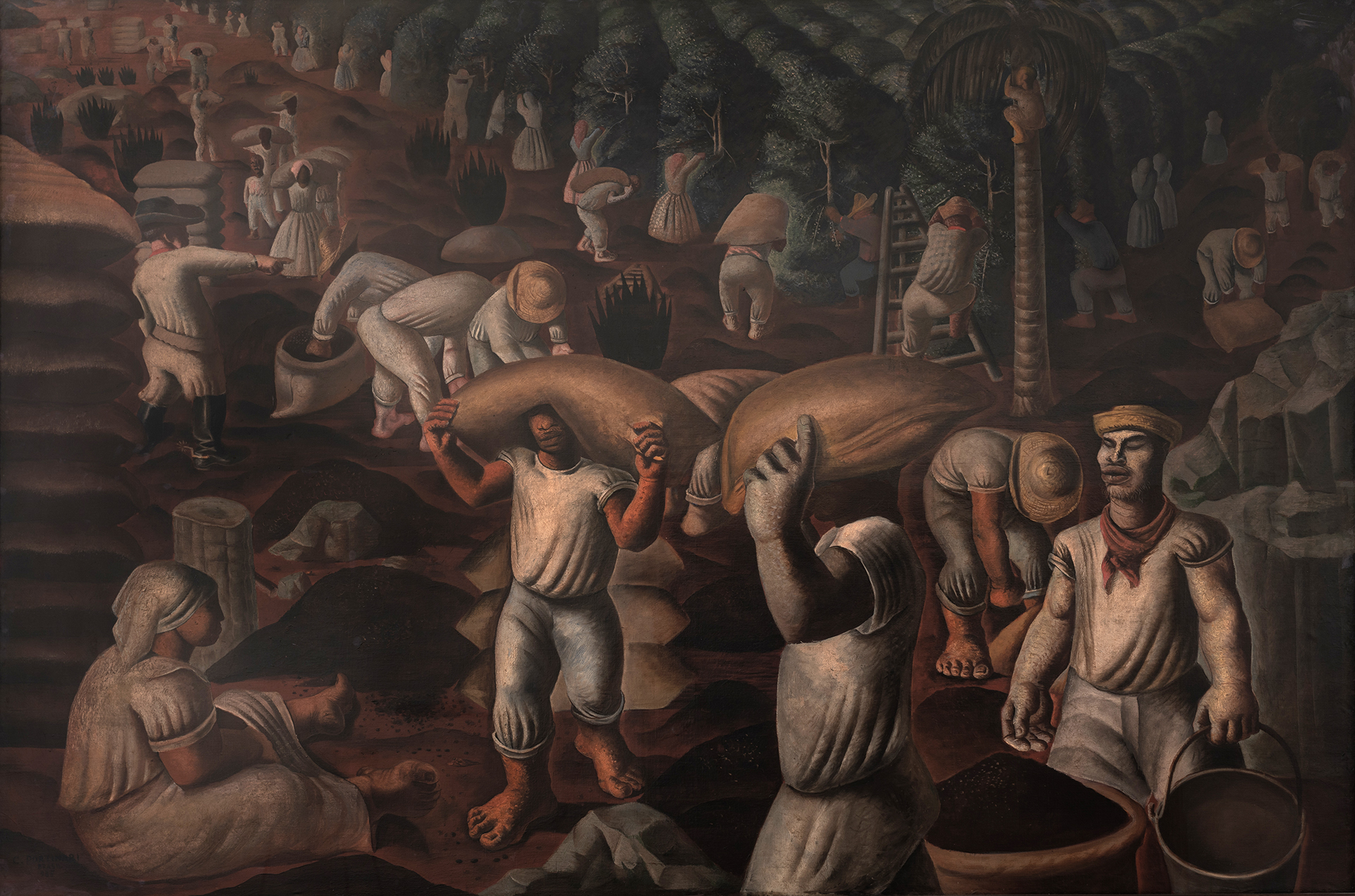
Café, 1935
Óleo sobre tela
Acervo MNBA/IBRAM
Enquanto Félix Taunay representa o homem reduzido diante do gigantismo das matas brasileiras transformadas em carvão, Djanira e Portinari iluminam outra dimensão da exploração: a do trabalho humano. Em sua pintura, Portinari revela a subjugação da natureza pela monocultura e o esforço extenuante dos trabalhadores — muitas vezes imigrantes ou descendentes de escravizados — que sustentaram a economia e moldaram o país. O ciclo do café, motor econômico do Brasil nos séculos XIX e XX, não apenas transformou paisagens, mas também corpos e destinos: florestas derrubadas, rios e solos exauridos, vidas consumidas. Djanira, ao retratar mineiros, e Portinari, ao fixar a dureza das lavouras, expõem que o progresso brasileiro se fez à custa de desigualdade, exploração e sofrimento. A arte, nesse sentido, torna-se testemunha sensível das forças históricas que forjaram a nação, revelando suas contradições.
Coffee, 1935
Oil on canvas
MNBA/IBRAM Collection
While Félix Taunay depicts man reduced in the face of the gigantism of Brazilian forests transformed into charcoal, Djanira and Portinari illuminate another dimension of exploitation: that of human labor. In his painting, Portinari reveals the subjugation of nature by monoculture and the strenuous efforts of workers—often immigrants or descendants of slaves—who sustained the economy and shaped the country. The coffee cycle, Brazil’s economic engine in the 19th and 20th centuries, not only transformed landscapes, but also bodies and destinies: forests felled, rivers and soils exhausted, lives consumed. Djanira, in portraying miners, and Portinari, in capturing the harshness of the fields, expose that Brazilian progress was made at the cost of inequality, exploitation, and suffering. Art, in this sense, becomes a sensitive witness to the historical forces that forged the nation, revealing its contradictions.